
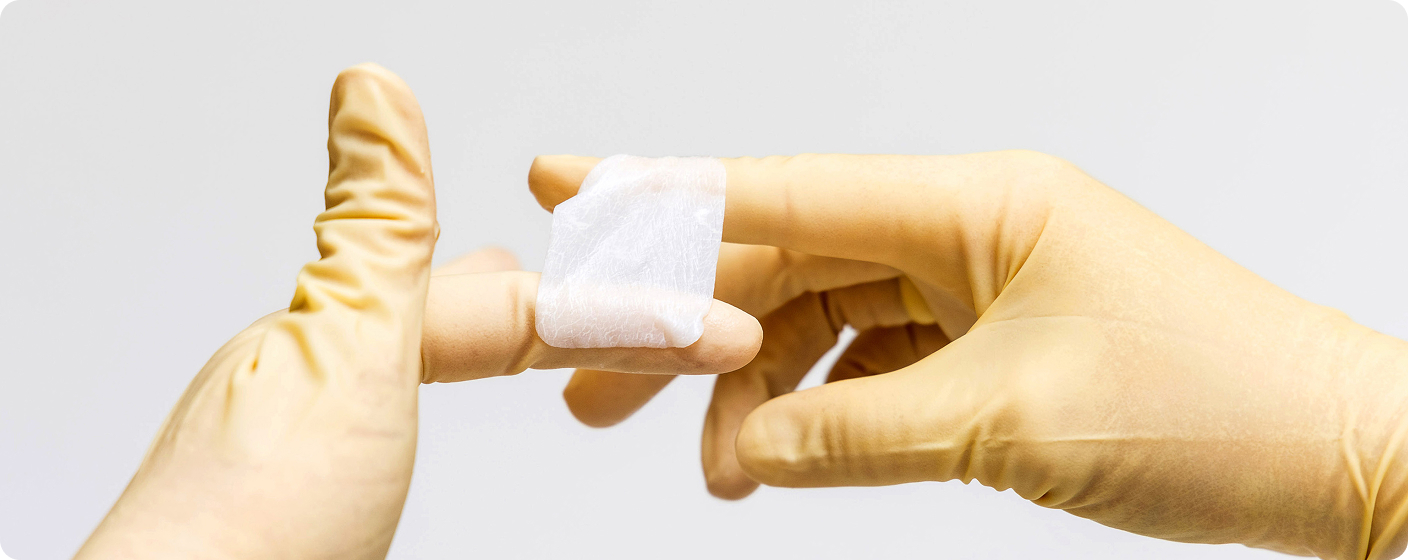
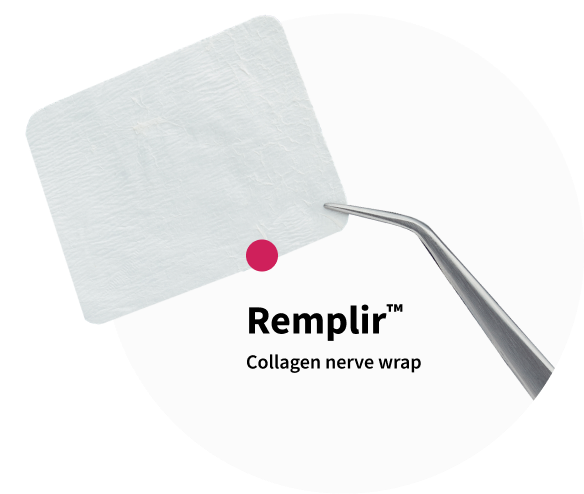
Remplir™ is a collagen nerve wrap designed to support the repair and protection of peripheral nerves.
The best predictor of success in peripheral nerve surgery is a tension-free, well-aligned coaptation using minimal epineurial microsutures to optimise axonal regeneration.
Yet depending on the type and location of the repair, achieving this can be challenging and outcome predictability has changed little over the past decades.
Biomaterial choice may play a larger role than previously thought.
Many materials fail to fully integrate with native tissue, leaving residues that impede healing. Rigid materials can also be difficult to handle and complicate management of size mismatches.
Remplir is engineered with Orthocell’s proprietary SMRT™ manufacturing technology to:

Mimic the natural epineurium with an absolute collagen wrap

Create an optimal healing environment for nerve regeneration

Be easy to handle and suture-sparing, simplifying the surgical process

Protect the repair site from scarring, adhesions, and inflammation.
Nerve wrap technology designed for surgical handling
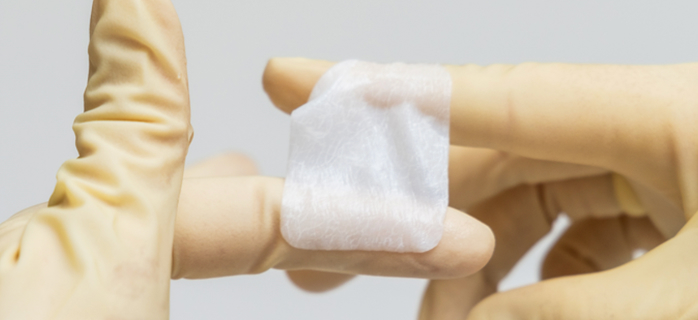
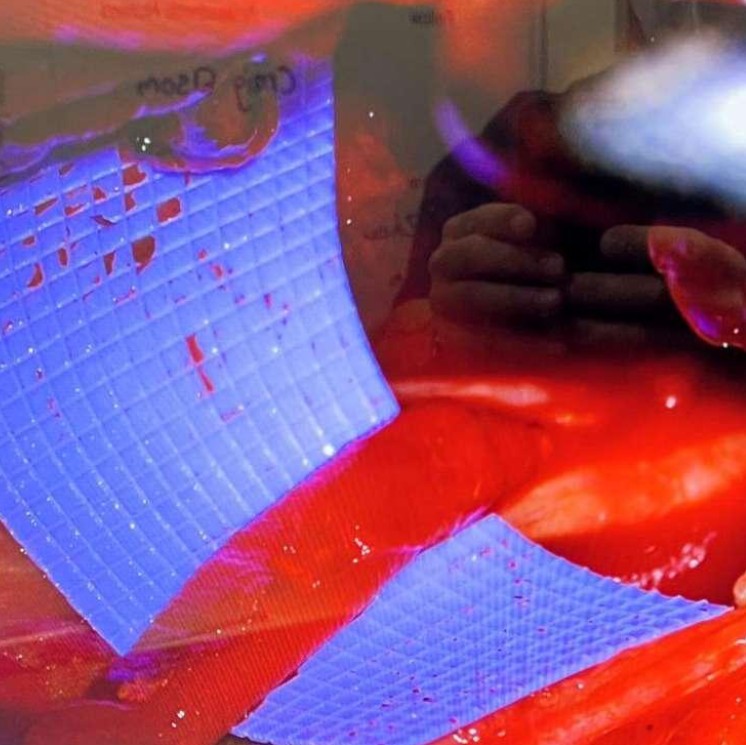
Remplir is designed to be easy to handle, reduces the amount of sutures required at the coaptation site and can be applied to the nerve and secured in position with or without sutures. The wrap is placed around the nerve or repair site with the smooth surface facing away from the nerve.
Remplir is both elastic and biocompatible with exceptional handling characteristics which help simplify peripheral nerve surgeries. Remplir’s SMRTTM manufacturing process preserves the natural bi-layer structure of the collagen membrane:
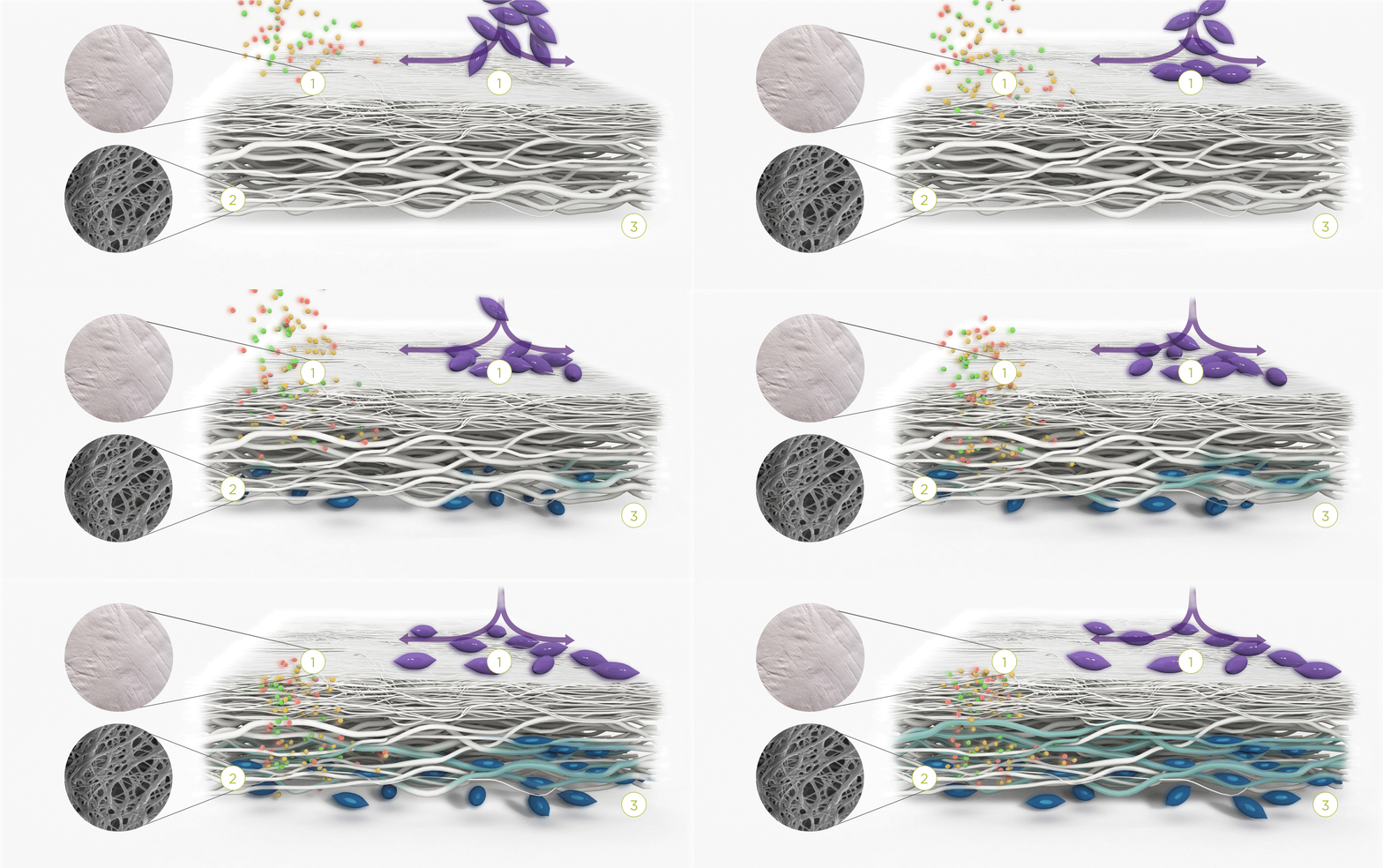
1Smooth outer surface
Designed to face away from the nerve, Remplir is a cell occlusive surface which helps minimize the risk of adhesions and facilitates nerve gliding during the critical healing process.
2Rough inner surface
Placed facing the nerve at the repair site, provides a favorable microenvironment for nerve healing.
3Epineurial substitute
Integrates seamlessly with the epineurium, providing a neurotrophic microenvironment conducive to nerve regeneration and a complete integration into the nerve tissue during the healing process.
How It Works
Tensionless repair is highly desirable in nerve reconstruction for several reasons, but primarily because it reduces the risk of additional damage to the nerve. Nerve repair with Remplir enables a reduction in suture requirements thus reducing the time needed to complete the surgery. The handling characteristics of Remplir assist surgeons perform complex reconstructive surgical procedures with tensionless repair.
How Remplir nerve wrap is used
Remplir nerve wrap is applied following standard procedures for nerve exposure and mobilization. Where required, the surgeon may perform neurolysis, coaptation neurotization or autograft/allograft procedures before placing the nerve wrap around the repair site.
General application steps include:
- Expose and mobilize the affected nerve using standard surgical technique.
- Perform nerve repair surgery.
- Trim Remplir to the desired size.
- Hydrate if desired.
- Wrap or overlay Remplir around the nerve repair site with the rough surface facing the nerve.
- Suture in place if required.
- Follow standard postoperative procedures and care.
Application of Remplir does not modify standard postoperative treatment.
Clinical Applications for Remplir™ Nerve Wrap
Remplir nerve wrap may be applied following standard nerve exposure and mobilization, including procedures involving neurolysis, decompression, microsurgical coaptation, nerve transfer, neurotization, or graft-assisted repair, when clinically appropriate and consistent with the indication for use.
Direct peripheral nerve repair and coaptation support
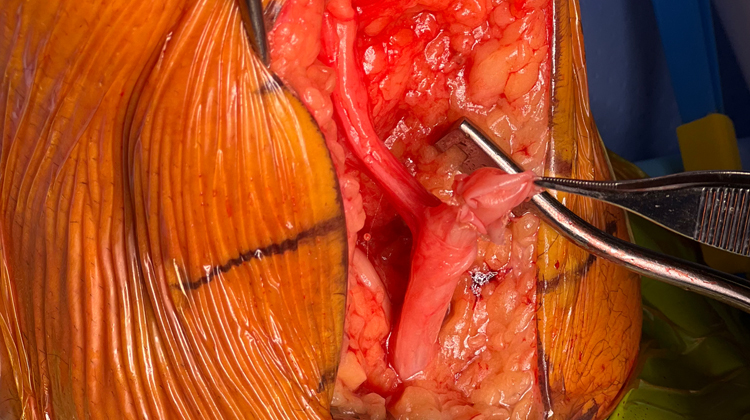
Remplir may be placed around a repaired peripheral nerve following coaptation of the nerve ends, where there is no substantial loss of nerve tissue. The wrap may be trimmed and positioned around the repair site with the tough side facing the nerve and secured with sutures if required. Remplir is designed to help protect the coaptation site, support nerve gliding, and provide a favorable local environment for nerve regeneration during the early healing period.
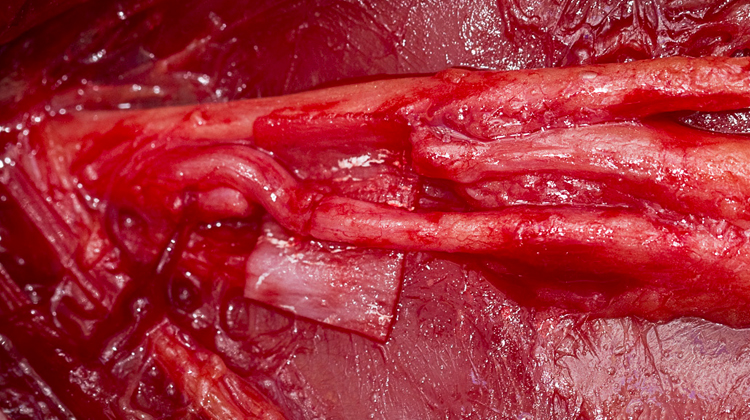
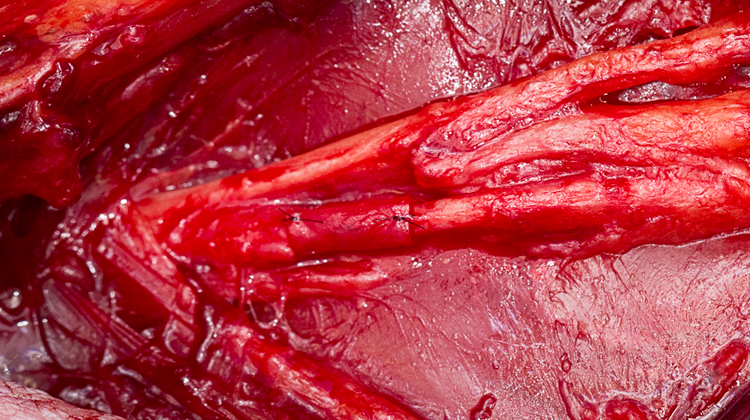
Decompression, transposition and Neurolysis
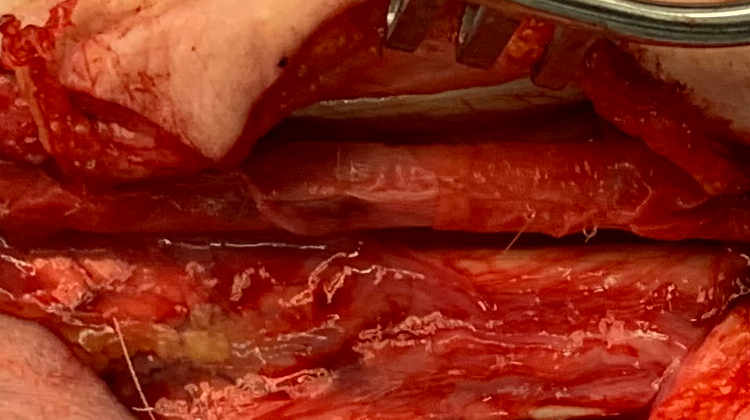
Nerve wrapping with Remplir after surgical treatment for compression neuropathy can potentially improve patient outcomes. The smooth outer surface of Remplir consists of collagen bundles that are tightly packed, acting as a biological barrier between the epineurium and surrounding soft tissue. The smooth outer surface of Remplir is cell occlusive which promotes nerve gliding and reduces the risk of adhesion formation after primary or revision surgery for compression neuropathy.
This may be relevant in procedures where reducing recurrent tethering or adhesion formation is a surgical consideration, including selected revision compression neuropathy procedures such as carpal tunnel or cubital tunnel surgery. As Remplir consists of collagen fibres that are similar in size and arrangement to normal human epineurium, it is an ideal membrane for regeneration of healthy nerve tissue.
Nerve transfer, neurotization, and reconstruction
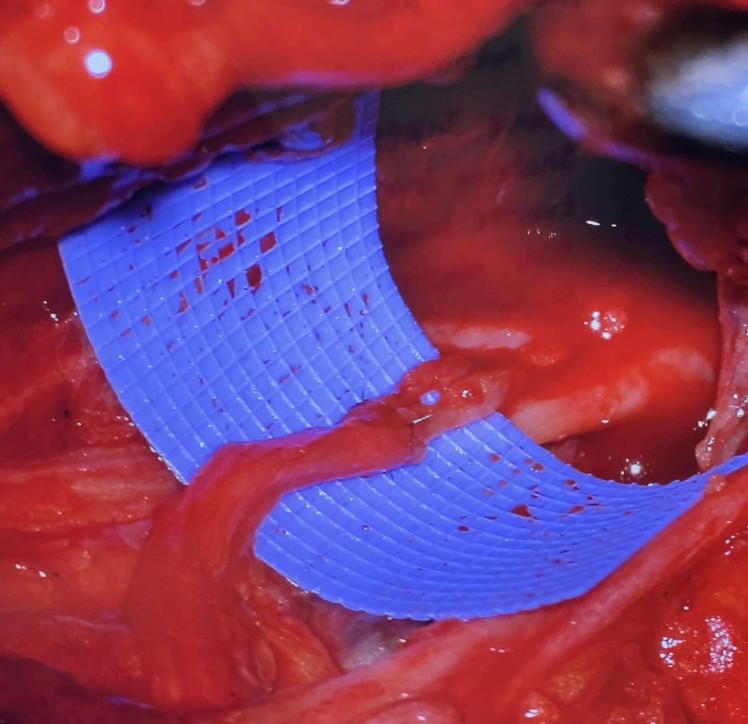
Remplir may be used in selected nerve transfer, neurotization, free functioning muscle transfer, and other peripheral nerve reconstruction procedures where protection of the repair site and support for axonal regeneration are key surgical considerations.
Where an autograft or allograft is used in peripheral nerve repair, Remplir may be considered around the relevant repair or coaptation site when clinically appropriate and consistent with the indication for use.
Neuroma related procedures
Remplir has also been successfully used as a nerve cap to prevent recurrence after surgical resection of terminal neuroma, or to prevent neuroma formation after neurectomy performed during amputation. As Remplir is a thin and flexible flat sheet, it can be easily wrapped and folded around the transected nerve end, then secured in place with sutures. The capped nerve end can then be implanted into muscle or fixed in place as desired. The close seal formed by Remplir around the nerve prevents regenerating axons from escaping, reducing the risk of neuroma formation.
Preclinical evidence
Remplir-assisted repair: restored nerve structure
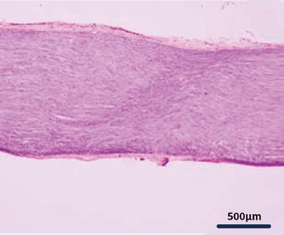
Intact rat sciatic nerve
Longitudinally-aligned nerve fibers surrounded by protective outer layer of epineurium
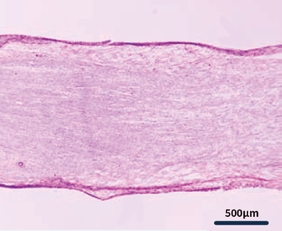
Remplir-wrapped rat sciatic nerve
- Restoration of nerve fiber structure
- Epineurium-like tissue is restored as Remplir is resorbed
- No scar tissue, inflammation or foreign body reaction observed
- No compression of nerve
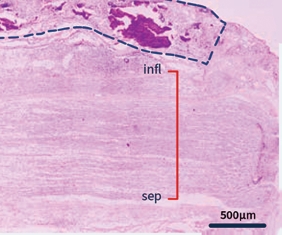
Comparator-wrapped rat sciatic nerve
- Abnormal nerve structure encapsulated in thick, inflamed fibrous tissue (blue)
- Inflammation and foreign body reaction observed
- Compression of nerve fibers with nerve entrapment (red) and separation of epineurium from nerve.
Facilitates gliding and minimises adhesion:
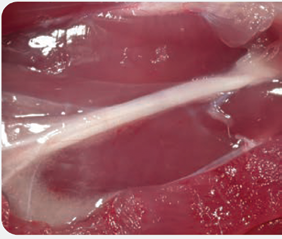
Intact rat sciatic nerve
- Pearly white appearance
- Moves freely within surrounding soft tissue
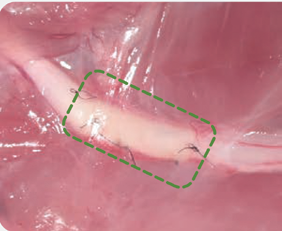
Remplir-wrapped rat sciatic nerve
- Integrated into nerve tissue with appearance resembling pre-injured state (green)
- No evidence of inflammation
- Minimal adhesions or scar tissue formation
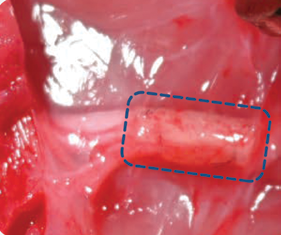
Comparator-wrapped rat sciatic nerve
- Not integrated with nerve tissue (blue)
- Multiple points of adhesion to surrounding tissue
- Inflammatory reaction observed
Clinical and post-market evidence
Orthocell’s ongoing post-market clinical follow-up study includes data from participants undergoing Remplir-assisted nerve reconstruction, decompression, and neuroma management procedures. Interim analysis reported no complications or adverse reactions related to Remplir. In the performance cohort, 81.1% of therapeutic targets achieved treatment success, while 89.5% of participants undergoing nerve decompression reported improvement or complete relief of compression symptoms.
The Remplir evidence base also includes published clinical experience in upper extremity peripheral nerve reconstruction using an epineurial-like collagen device, as referenced in Orthocell materials.
Download compendiumNerve Repair, Made SMRTTM
Perspectives from Dr Alex O’Beirne
Australian orthopaedic nerve specialist and Remplir clinical trial lead
“We are now seeing a consistent return of arm and hand function following nerve transfer surgery with Remplir… Remplir is increasing the success rate and efficiency of nerve transfer surgery.”
Read more →
Ordering and product support
Remplir is supplied in four sizes to support different nerve diameters and surgical use cases. For product availability, ordering pathways, clinical support, or distributor information, contact the Orthocell team.
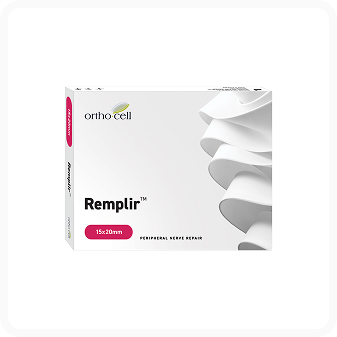

15x20mm
Nerve diameter: Up to 3mm
Order code: ON-152
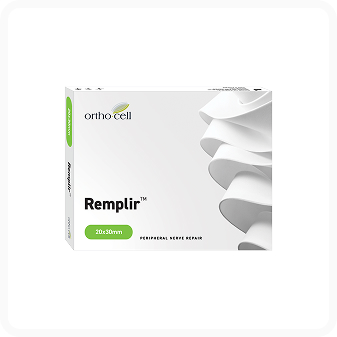

20x30mm
Nerve diameter: Up to 5mm
Order code: ON-203
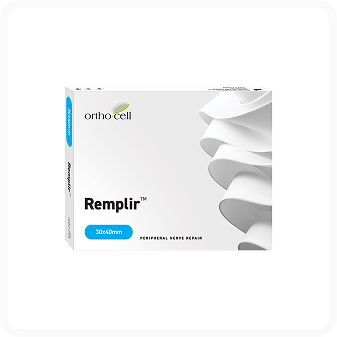

30x40mm
Nerve diameter: Up to 10mm
Order code: ON-304
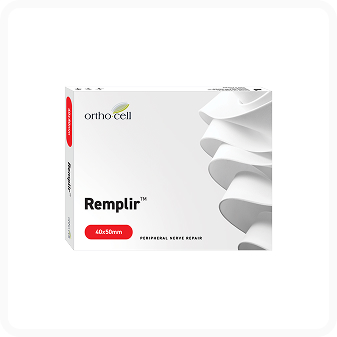

40x50mm
Used for longitudinal wrapping
Order code: ON-405
Practitioner FAQs
What is Remplir made from?
A What is Remplir made from? Remplir is pure porcine collagen from porcine peritoneum, Type I Collagen, free of immunogenic components like α-Gal and DNA residues
Which side faces the nerve?
A Which side faces the nerve? The rough side faces the nerve; the smooth side is placed facing away from the nerve.
When may Remplir be used?
A When may Remplir be used? Remplir may be used in peripheral nerve surgical procedures such as nerve repair, nerve reconstruction, nerve decompression, neurolysis, nerve transfer or neuroma management.
Is Remplir resorbable?
A Is Remplir resorbable? Yes, preclinical data showed Remplir’s integration and resorption during the healing period, with complete resorption and restoration of epineurium-like tissue observed by 24 weeks in the studied model.
What safety data supports Remplir?
A What safety data supports Remplir? Orthocell materials report no device-related adverse events across more than 75,000 collagen membrane units sold globally as of May 2026, with no reportable adverse events identified through post-market surveillance at that time.